
In the evolving world of employment law and public-sector reforms, one verdict earlier this year quietly reaffirmed a powerful principle: fair process matters just as much as policy.
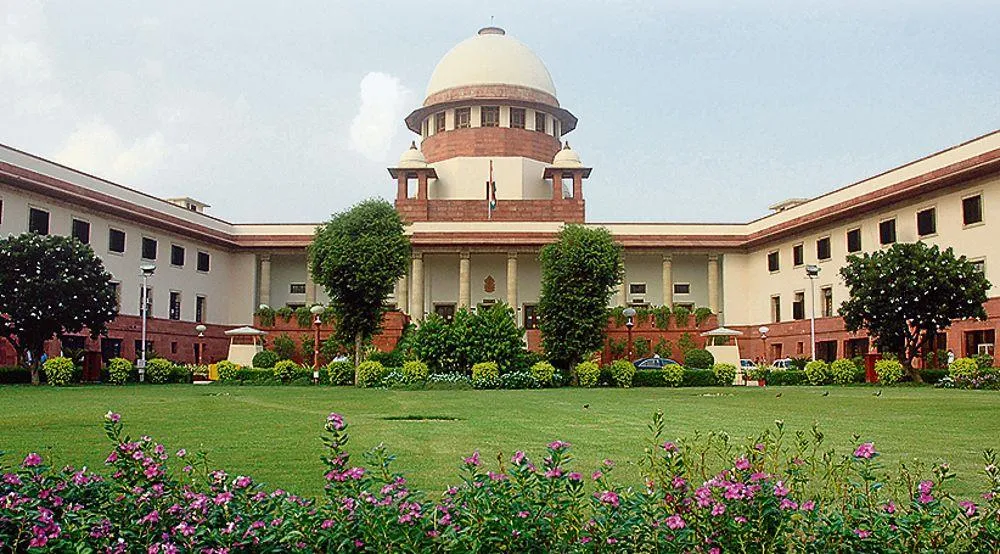
The Supreme Court of India, in a judgment delivered in early 2025, examined a case involving a retired West Bengal government employee, Jaya Bhattacharya, whose long absence from service (nearly two decades) was regularised as “extraordinary leave.” Yet, upon retirement, she was denied pension on the grounds that this period constituted a “break in service.”
What followed was a critical lesson for employers—particularly government bodies—on the importance of procedural integrity, consistency, and the ethical obligation to honour service records that have been officially regularised.
Extraordinary Leave: A Grey Zone in Government HR?
Extraordinary leave (EOL) is often granted in government services for extended personal reasons such as health, family situations, or overseas assignments. While the rules around EOL vary slightly across states and sectors, a common feature is that it does not break the continuity of service—if granted formally.
In Bhattacharya’s case, while the employer had regularised the absence as EOL, it later used that same absence as a pretext to deny her pension, claiming it as a service break. This contradiction formed the crux of the legal challenge.
What the Supreme Court Clarified
The Supreme Court ruled clearly: if an employee’s absence is regularised as extraordinary leave, it cannot be subsequently treated as unauthorised for the purpose of denying pension.
Justices B.R. Gavai and Prashant Mishra also noted that no formal inquiry was conducted into the absence, which weakened the state’s argument. Denial of pension, they said, cannot be imposed without due process—especially when service was validated by the employer itself through regularisation.
This case underlined a key legal point often overlooked in HR compliance: the formality of record-keeping and decision-making has direct implications for employee rights.
Why This Case Matters More in 2025
The ruling gains fresh relevance today as government departments and public-sector enterprises undergo major transitions—driven by digitisation, budgetary cuts, and post-pandemic policy recalibrations.
Several states, including Andhra Pradesh and Karnataka, have recently made controversial changes to work-hour norms and HR frameworks. In such contexts, the rights of legacy employees, especially retirees or long-term workers with complex service histories, are vulnerable to administrative inconsistencies.
This judgment is also a reminder for HR professionals and government audit teams to ensure alignment between service records, disciplinary proceedings (if any), and final retirement benefits.
Organisational Takeaways
- HR and legal teams must verify that all leave types, especially long-term or special-category leaves, are documented and internally acknowledged without ambiguity.
- Retrospective reinterpretation of leave or service gaps without formal inquiry is likely to fail legal scrutiny.
- Pension rights, once accrued and based on service continuity, cannot be denied purely on technicalities if the employer has failed to follow due process.
A Call for Procedural Integrity
The Bhattacharya case is not just about one individual’s pension—it’s about fairness in institutional behaviour.
In a time where Indian workplaces—both public and private—are rapidly evolving, the foundational values of process, transparency, and employee trust are more critical than ever. This case reminds us that when policies are not applied consistently or fairly, even a single lapse can set the stage for protracted legal battles—and reputational costs.